

Why BMSG Artists Feel Different on Stage
How SKY-HI Built One of Japan’s Most Unusual Music Labels

If you watch enough Japanese pop performances, certain patterns start to feel familiar.
Many groups are built around cohesion.
The image is clear.
The movements are precise.
Each member supports a shared ideal of what the group should look and feel like.
There is comfort in that kind of polish. Audiences know what they are seeing, and performers know what is expected of them.
And then you watch artists from BMSG, and the feeling shifts.
They are still extremely professional. The choreography is still tight. But something in the atmosphere feels less sealed off. The individual members remain visible. The moments between them feel real. To me, the stage often feels less like a finished product and more like a place where the artists are actually present with each other.
Even people who are seeing BMSG for the first time seem to notice that difference pretty quickly.
So where does it come from?
When I look closely at BMSG performances, three things stand out.
1. Individuality Is Not Hidden
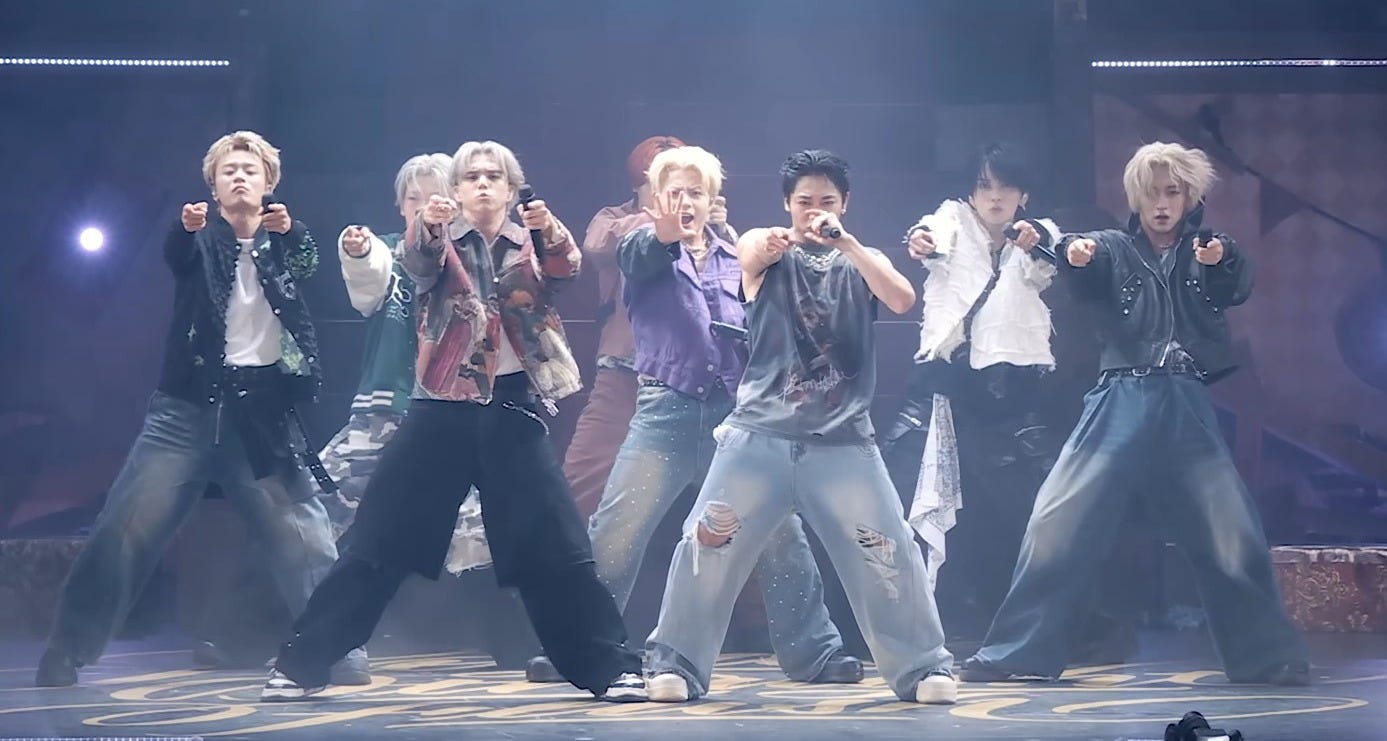
One of the first things I notice in BMSG groups is that the members rarely feel interchangeable on stage.
A lot of pop performances depend on visual unity. Expressions, gestures, and movement are shaped to create one clean group image. That approach can be effective, of course. But with BMSG, individual identity usually stays visible inside the structure.
You can see it clearly in groups like BE:FIRST and MAZZEL. Even when they are doing synchronized choreography, their voices do not flatten into one tone, and their stage presence does not blur into sameness. Each member still feels like himself.
That matters.
The group moves together, but it still feels like a group of distinct artists moving together. That balance gives BMSG performances a different texture. The choreography is not loose. The discipline is there.
What makes this especially interesting, though, is that strong individuality does not seem to create disorder.
Each member appears to understand his own strengths, tone, and role within the group. Just as importantly, they also seem aware of what the others bring.
That creates a different kind of unity.
Not the unity of sameness, but the unity of trust.
The group can move like one organism, precisely because each member is allowed to remain fully distinct.
Precision and personality can exist at the same time.
2. The Stage Still Feels Human
Another reason BMSG performances feel different is that they often keep a sense of spontaneity.
Most pop stages are built to reduce unpredictability. Everything is rehearsed until it looks effortless. Sometimes so much so that the performance starts to feel almost machine-like.
BMSG does not abandon structure, but it often leaves room for small human moments inside it.
A glance. A laugh. A reaction that feels like it happened in real time.
Those moments are brief, but they change the atmosphere. They do not break the performance. If anything, they make it breathe.
I think this becomes especially clear in live settings, where the energy between the members and the audience can shape the stage in ways that are hard to fake. You can also feel it in stripped-down formats like THE FIRST TAKE, where there is nowhere to hide, and personality comes through more clearly than visual perfection.
A good example is MAZZEL’s “Get Up and Dance” on THE FIRST TAKE. The performance is polished, but it still feels loose enough for personality and chemistry to surface.

3. The Philosophy Behind the Stage Is Different
In the end, I do not think this comes down to choreography alone or stage direction alone.
It comes from the label.
BMSG was founded by rapper and producer SKY-HI, and from the beginning, he has spoken openly about artistic growth and individual expression. That way of thinking was already visible in THE FIRST.
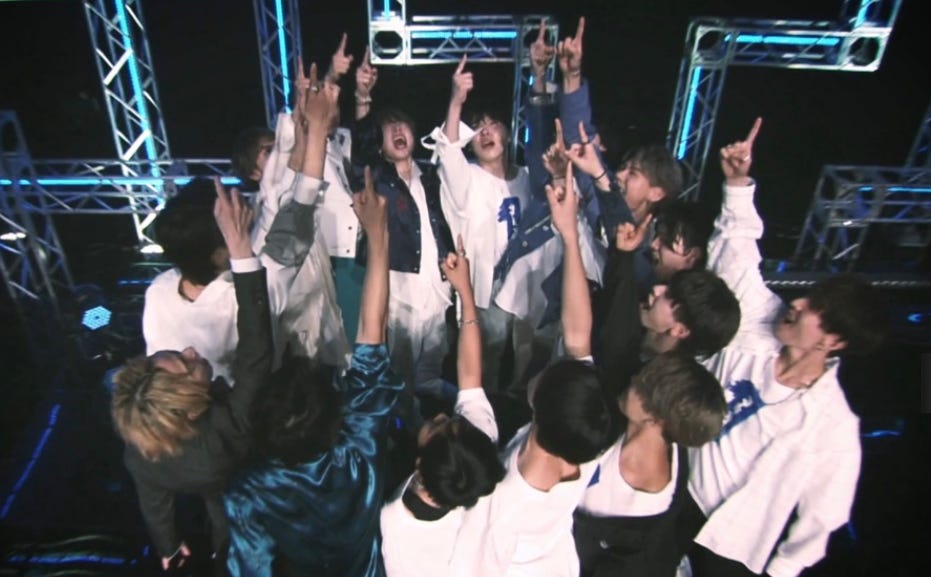
What stood out there was not only the level of competition but also the emphasis on helping artists grow together.
That same attitude still seems to shape the label now.
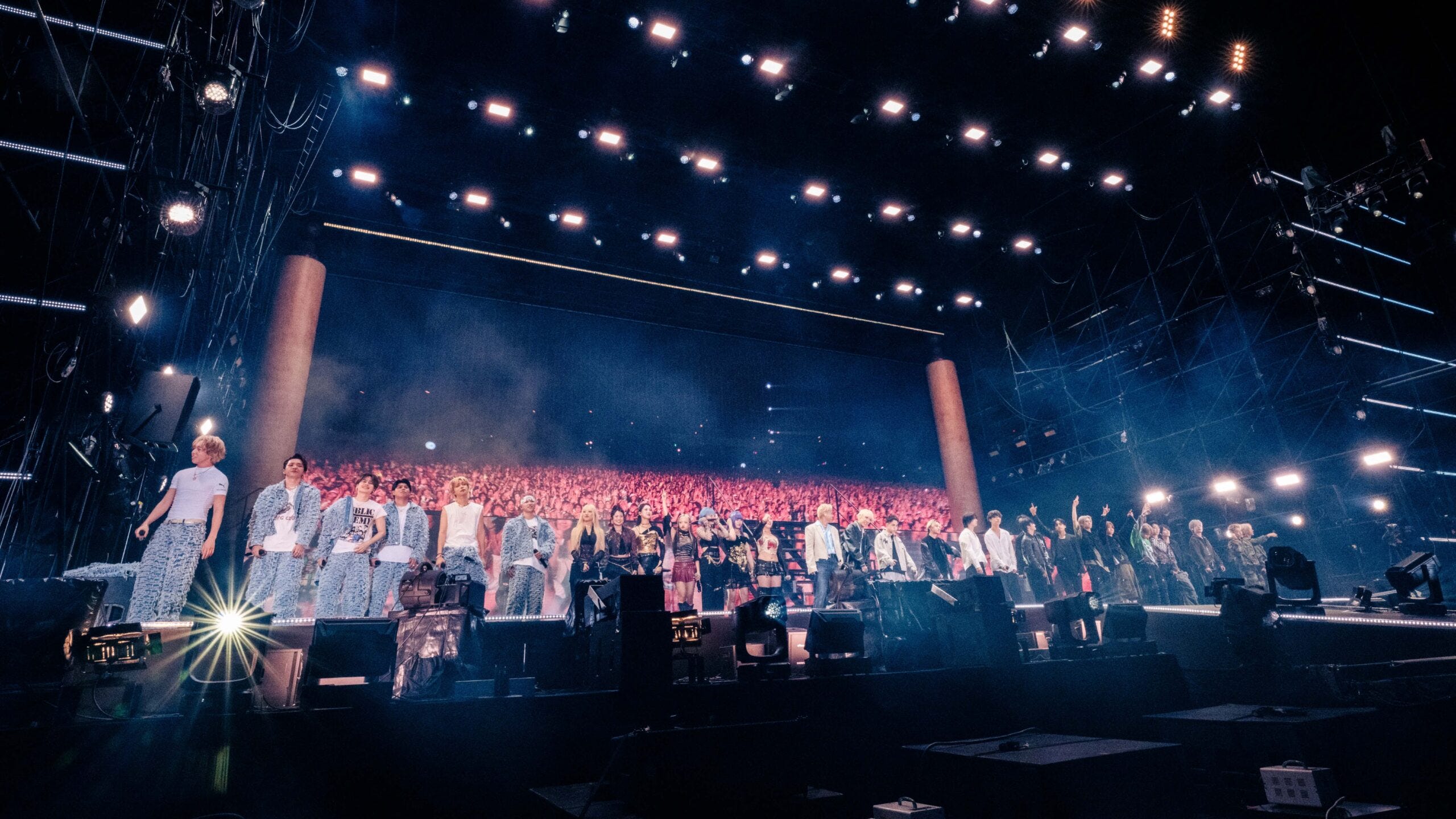
When BMSG artists share the stage, the atmosphere often feels collaborative rather than territorial. Cross-group performances tend to emphasize connection. The collective performance of “Grand Champ” at the BMSG Festival is a good example. Artists from different groups come together on one stage, and the feeling is not one of rivalry. It is shared momentum.
That is not something you create at the last minute with stage direction. It has to be built much earlier, in the environment in which the artists grow up.
When artists develop in an environment that values individuality and collaboration, the effects eventually become visible where it matters most: on stage.

The Culture Behind the Performance
What people notice in a BMSG performance is not just a style choice.
It comes from a different way of developing artists.
Individual identity is not treated as a problem to smooth out. Human interaction is not edited away. Growth matters, and so does collaboration.
By the time the lights go up and the music starts, that culture is already there.
And honestly, I think that is why BMSG artists feel different on stage. Not because they are trying to look more natural, but because the system behind them seems to leave room for them to actually be themselves.
Written by Lily | BMSG Pulse
Really good article.
I think you've nailed how BMSG stands out from old J-pop boy-group algorithms.
I think what makes BMSG so interesting is that they treat their talents as artists and people, which I think a lot of Japanese agencies have forgotten.
I can feel the realness and the chemistry, especially when it comes to interactions between all the talents in the company, within their group or outside their group. It just feels like they actually talk to each other, which is really not supposed to be a hard thing, but many can't really do so.
Sky-hi also really gives his talents chances and is genuinely willing to take those chances. He really knows what type of talent he has on hand and knows how to let them use it.